
Development of integrated oil removal and water treatment process equipment technology for produced water systems
Through development of next-generation unconventional resource produced-water reuse and zero liquid discharge technologies and overseas T/B demonstration
Growing into small but competitive global leaders in future markets
In accordance with site conditions and local regulations
Independent high-efficiency produced-water reuse and zero liquid discharge technologies using domestically produced materials
Final research outcome targets
Modularization · Reduction · Recovery
Construction and operation
- Construction within 10 days
- Continuous operation for at least 90 days
- 600 bpd · Localization rate: 80%
Oil and organic matter removal
- 99% oil removal · 90% organic matter removal
- Treatment cost: 2.0 $/barrel
- 12.5 $/m³
Reuse and zero liquid discharge
- 90% reuse rate
- 30% concentrate recovery · Cost: 8 $/m³
- Zero liquid discharge technology compliant with local regulations
Technology framework
Four constituent modules
- 01Constituent modules Treatment of oil and corrosive organic matter
- 02Constituent modules Treatment of high-temperature steam circulation water
- 03Constituent modules High-recovery reclaimed-water production
- 04Constituent modules Compact zero liquid discharge unit
Research outcome targets and performance indicators by technology
Operating principles · Key performance · Beneficiaries
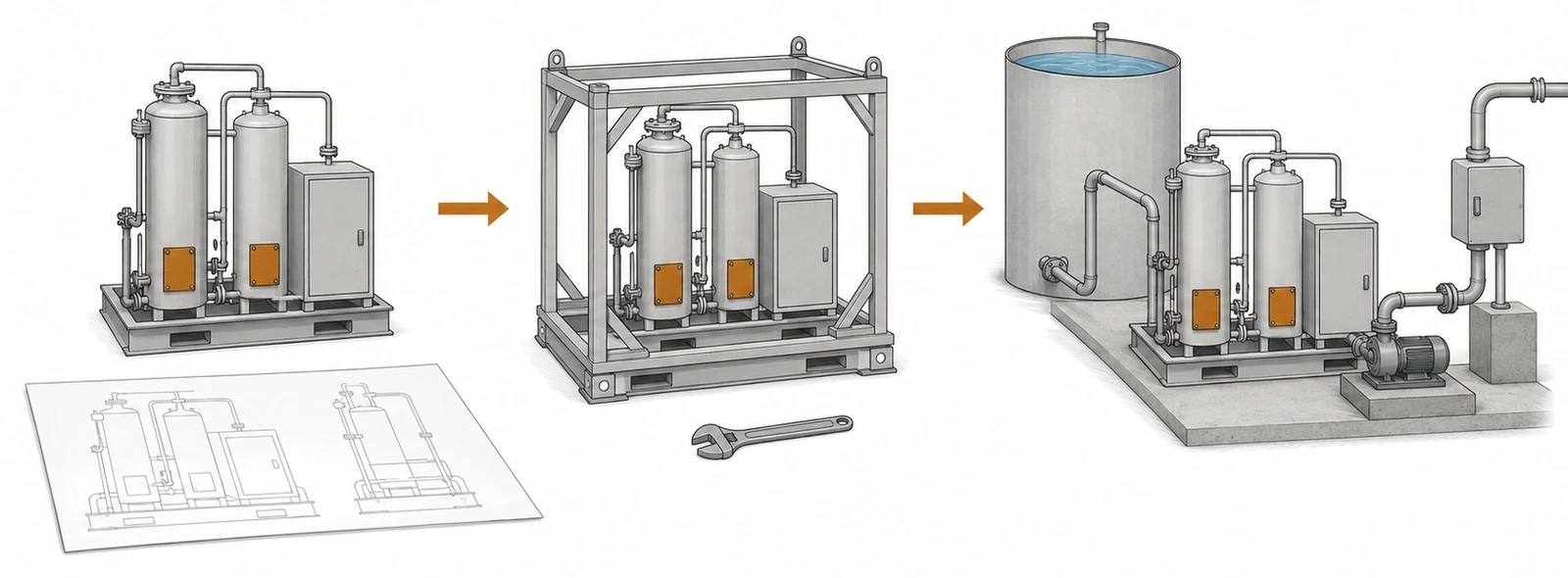
Integrated modular construction and operation
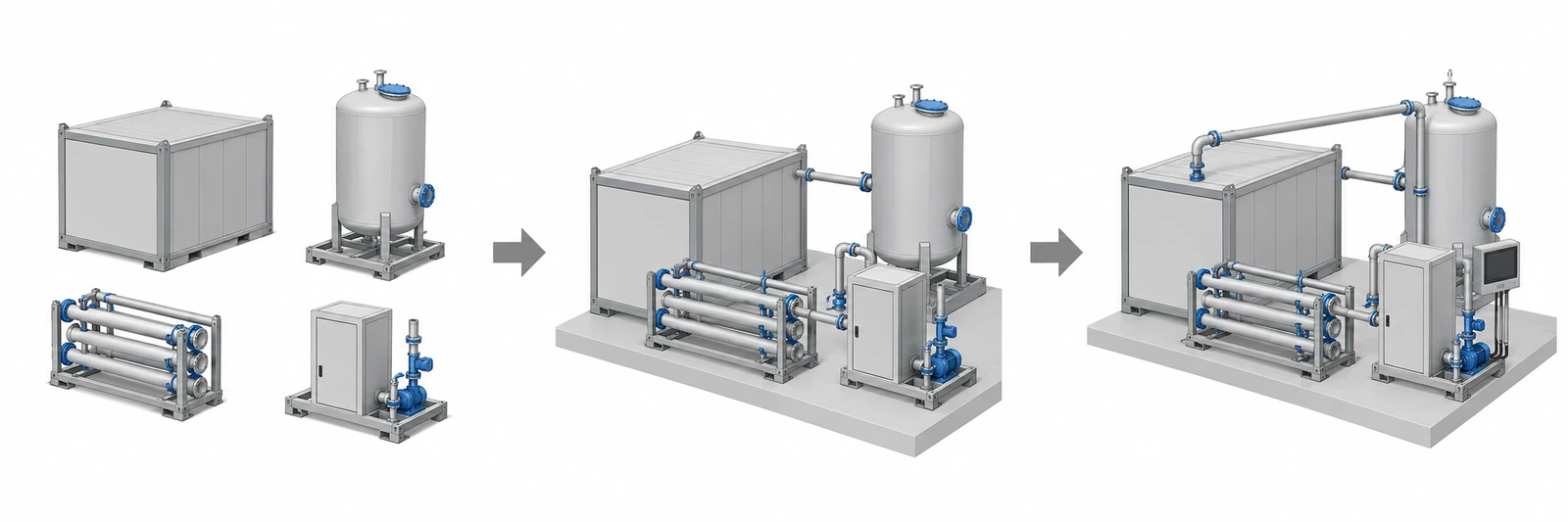
Unit processes are fabricated as modules, connected on site, and operated as an integrated process. The illustration is a conceptual diagram of module assembly.
Construction and operating performance
- Construction within 10 days
- 90 days of operation (0% downtime)
- Design capacity: 20,000 bpd
Research activities and expected benefits
- Modularization and compliance with local regulations
- Simulation optimization
- Remote support
Beneficiaries · Target market Technology and engineering companies Engineering
Induced Gas Flotation for oil removal
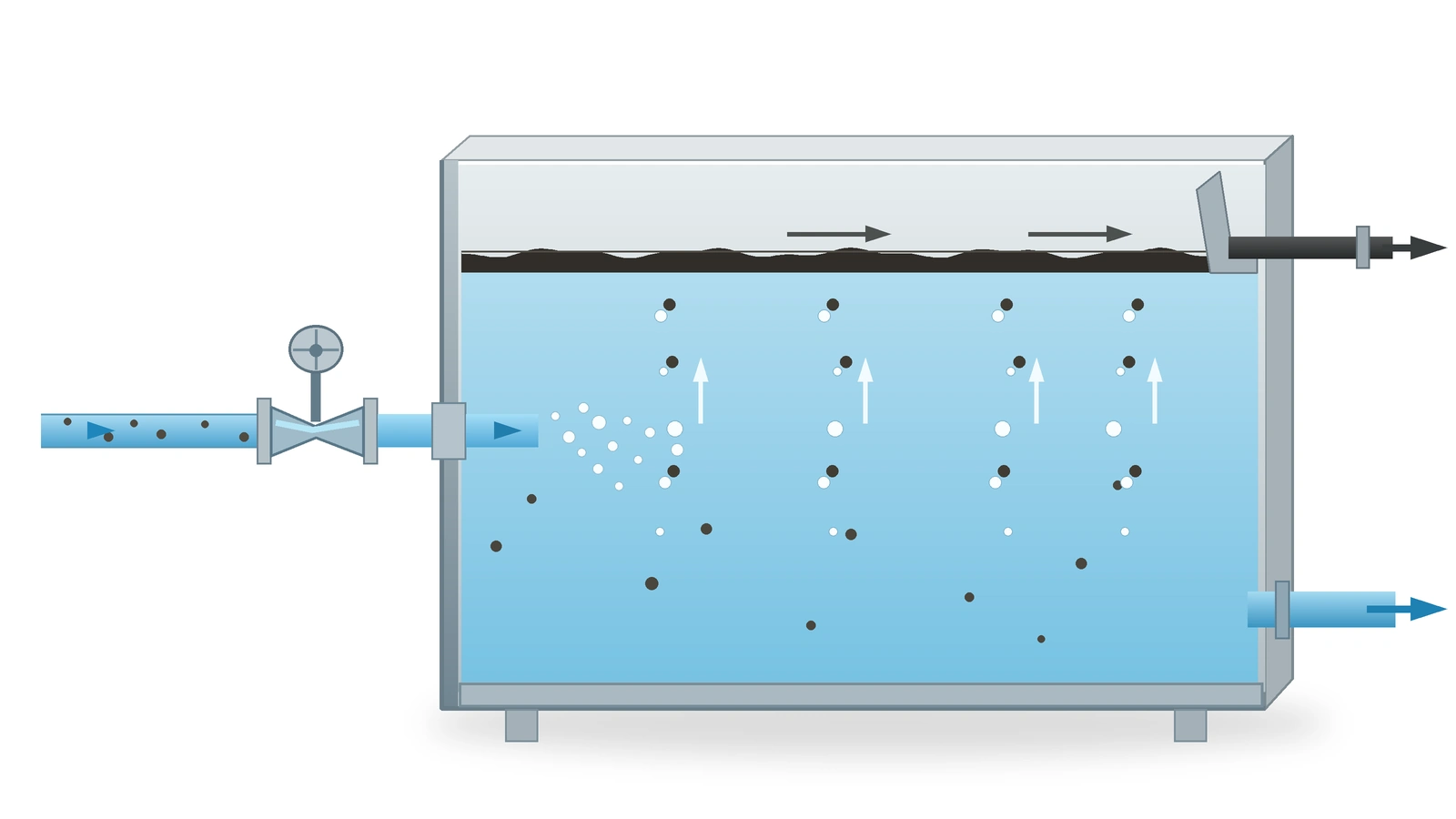 Produced water and dissolved gas Pressure release Microbubble generation Floated oil Treated water
 Gas dissolved in pressurized produced water forms microbubbles as pressure is released. The bubbles attach to oil droplets dispersed in the water and carry them to the surface. The floated oil is recovered, and treated water is discharged.
Oil removal performance
- 90% oil removal
Research activities and expected benefits
- Oil removal accounting for bitumen API gravity
- Minimizing impact on downstream processes
- Remote support
Beneficiaries · Target market Technology companies and manufacturers Engineering, fabrication, and procurement
Electrodes and membranes for high-temperature produced water
 Electrode treatment Membrane Treated water Residue
 Electrode treatment and membranes reduce contaminants in produced water. The diagram illustrates the separation of water passing through the membrane from the stream containing residual contaminants.
Contaminant reduction performance
- 90% organic matter removal
- Oil concentration: 1 ppm
Research activities and expected benefits
- Handling high-temperature produced water
- Reduction of corrosive membrane fouling
- Productivity improvement
- Chemical-free operation and environmental sustainability
Beneficiaries · Target market Technology companies and manufacturers Engineering, fabrication, and procurement
High-recovery reuse and zero liquid discharge
 RO Concentrate Reclaimed water Additional recovered water Residue
 Reclaimed water is obtained through membranes, and the remaining concentrate is treated separately for additional water recovery. Concentration and condensation illustrate the principle of additional recovery; this is not an actual fabrication drawing.
Reuse and recovery performance
- 90% reuse rate
- 30% concentrate recovery
- Low cost: 8 $/m³
Research activities and expected benefits
- Achieving high recovery and zero liquid discharge
- Efficient operation
- System stability
Beneficiaries · Target market Technology companies and manufacturers Engineering, fabrication, and procurement
Implementation strategy and direction
Five implementation strategies
Strengthening core design capabilities
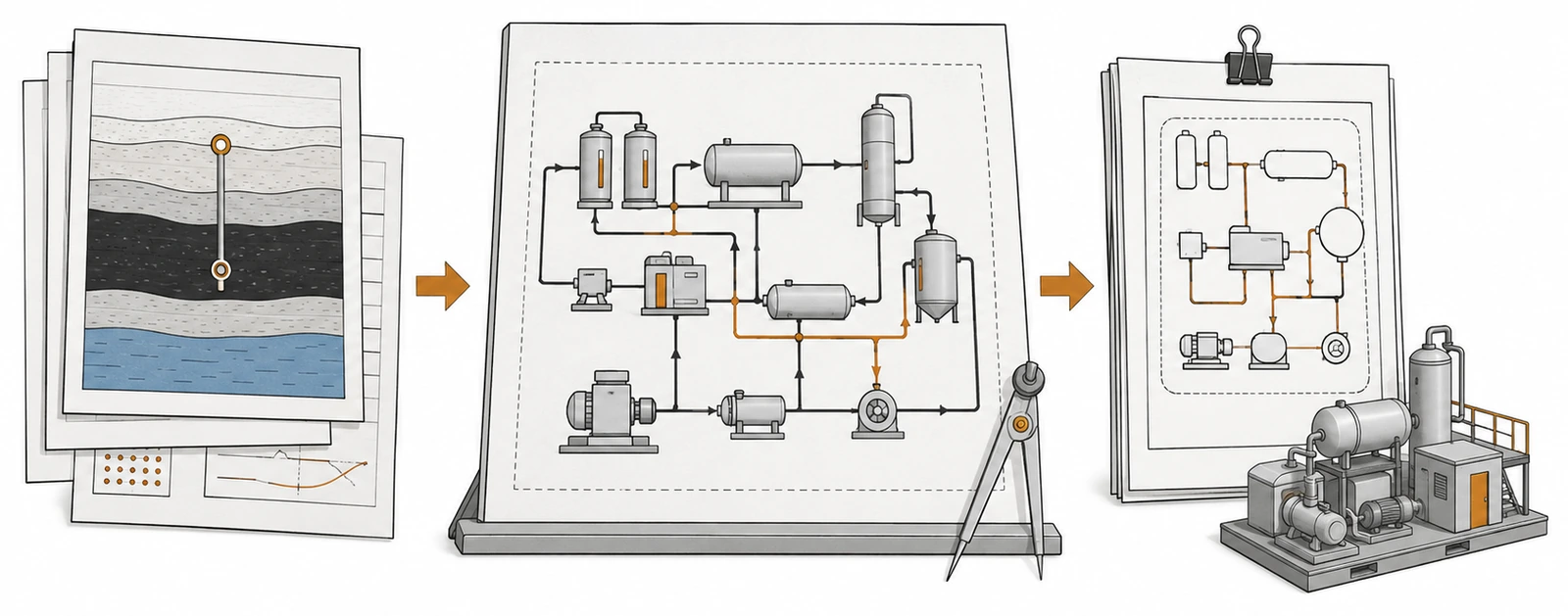
Implementation linked to existing research outcomes

Improving technology maturity
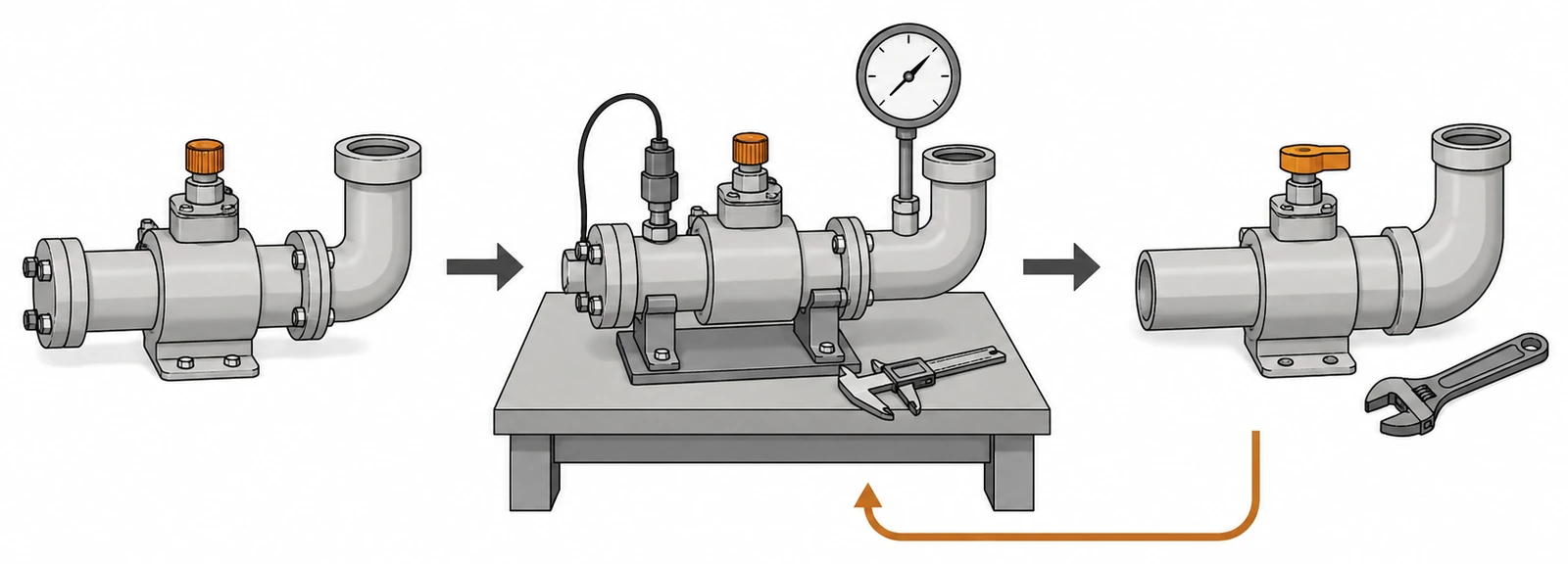
Utilizing domestic and international networks
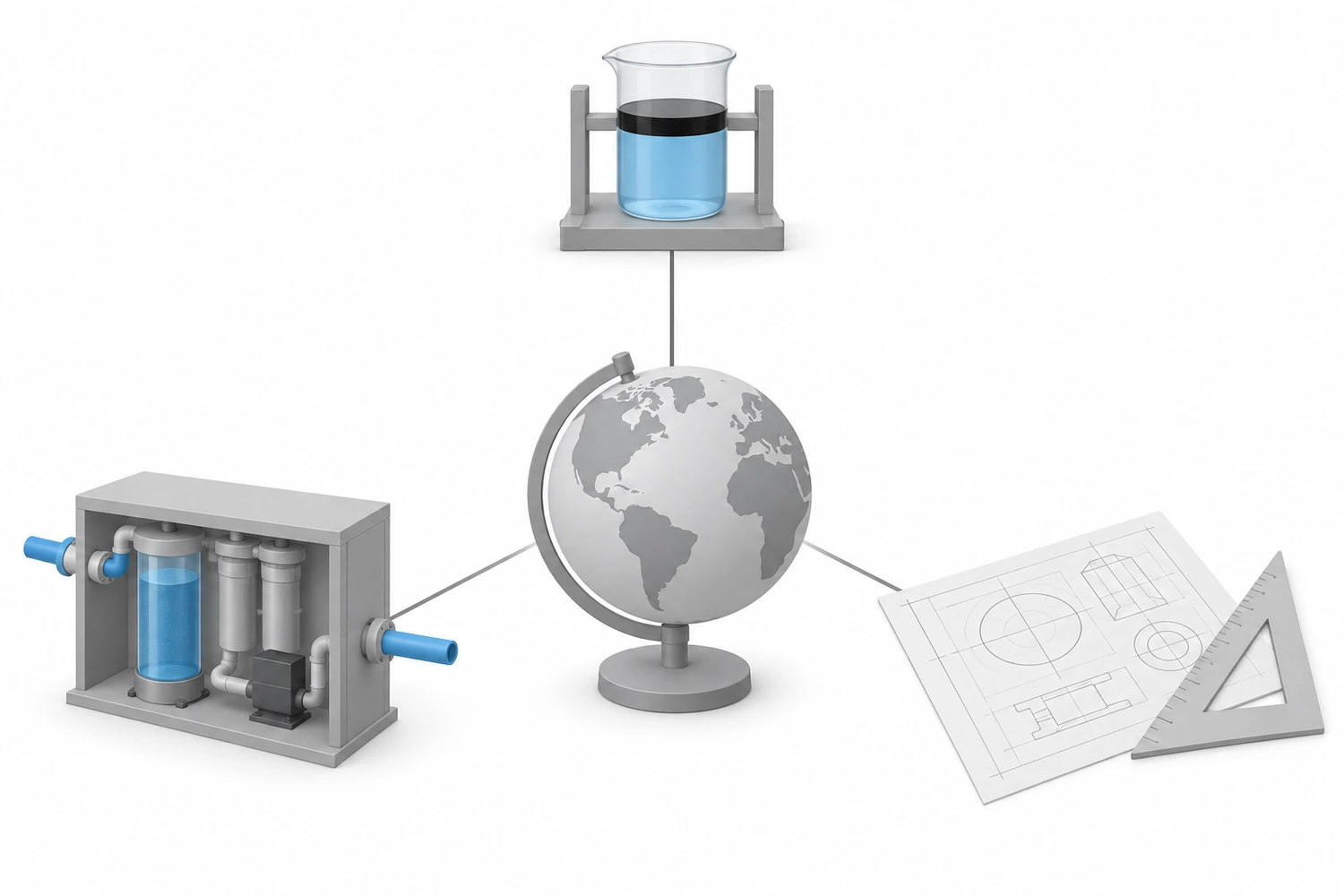
Promoting practical application and commercialization
Research activities and outcomes
Project Year 1–Project Year 7
Project Years 1 and 2 · Design and development
- Building a database of overseas produced-water conditions
- Domestic demonstration site survey
- Basic modular design
- Process simulation model
Project Years 3 and 4 · Domestic T/B
- Domestic demonstration T/B construction and evaluation
- Detailed modular design
- Localization of materials and equipment
- Integrated process simulation model
Project Year 5 · Overseas cooperation
- Securing an overseas T/B in coordination with the program
- Overseas T/B site survey
- Modular improvements tailored to local conditions
- Securing a domestic T/B operational database
Project Years 6 and 7 · Overseas T/B
- Support for construction and operation of overseas demonstration plants
- Establishment of an overseas plant support system
- Localization of modules
- Securing 20,000 bpd FEED
AS-IS / TO-BE
Transition objectives for three component technologies
Construction and operation management technologies for integrated water treatment processes tailored to unconventional oil
- Large plant footprint and limited mobility
- Distributed construction of functional facilities at remote sites
- Difficulty responding to problems at remote sites
- Wear, corrosion, and heat loss in materials for each unit process
- Construction within 30 days · Downtime within 15 days
- Modular design of unit processes for transport and one-touch assembly
- Securing technology for high silica concentrations under local conditions and developing modules
- Overseas demonstration through domestic test bed validation
- Rapid response to problems at remote sites
- Construction within 10 days · Uninterrupted continuous operation for at least 90 days
Pre-pretreatment and pretreatment technologies to address variations in the quality of water treated by the gathering and separation process
- Insufficient standardization of pre-pretreatment and pretreatment processes
- Insufficient measures for managing and controlling corrosive organic matter
- Use of imported ceramic membrane technology for pretreatment
- Organic matter removal efficiency of 85% or less
- Oil component removal efficiency of 90% or less
- Pretreatment cost of 3.0 $/barrel or more
- Process technology localization rate of 30% or less
- Securing IGF optimization technology through the introduction of on-site mixed gas
- Reduction of corrosive organic matter to prevent membrane fouling
- Securing and demonstrating ceramic membrane modularization and localization technologies
- Organic matter removal efficiency of at least 90%
- Oil component removal efficiency of at least 99%
- Pretreatment cost of 2.0 $/barrel or less
- Achieving a process technology localization rate of at least 80%
High-recovery main treatment and post-treatment technologies for high-quality reclaimed-water production
- Environmental regulations require environmentally sound technologies
- Use of ion-exchange resins with high dependence on imports
- Water reuse rate of 85% or less
- Concentrate recovery rate of 20% or less
- Process technology localization rate of 30% or less
- Participation of a Korean mid-sized enterprise holding foundational patents for zero liquid discharge
- Demonstration of domestically developed high-recovery RO modules to improve water reuse
- Water reuse rate of at least 95%
- Concentrate recovery rate of at least 30%
- Achieving a process technology localization rate of at least 80%